
Keypads, Intercoms and Remotes for Ann Arbor Gates
The keypad, the intercom and the remotes tell the opener when to move. When one of them sticks, crackles or goes missing, the gate stops letting the right people through.
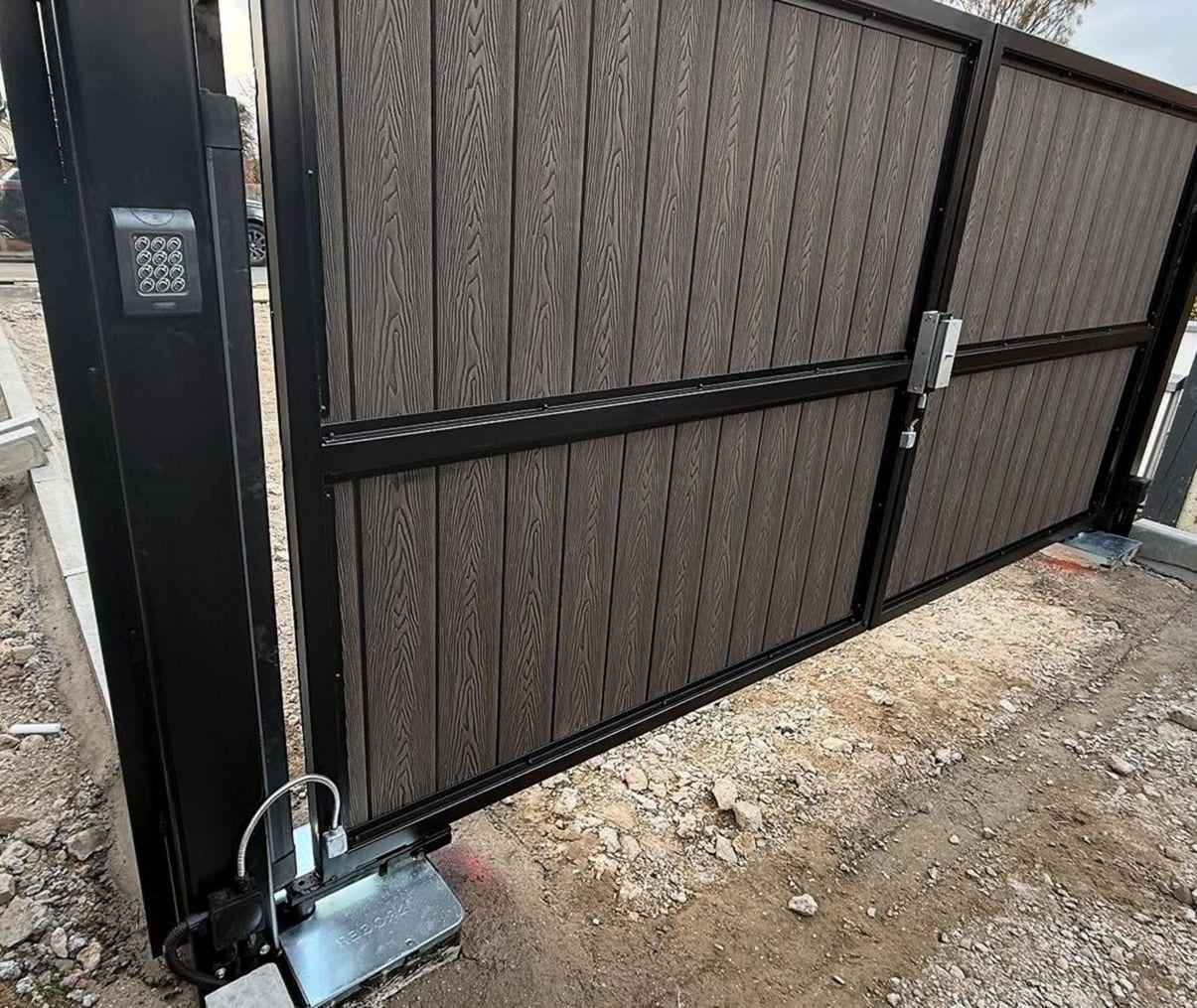
Signs the Entry System Needs Work
Entry trouble usually starts small: one more press of a button, one more remote nobody can account for. These signs point to the keypad, the intercom or the remotes rather than the gate itself.
- Keypad buttons stick, need a hard press, or have worn so smooth the numbers no longer show.
- Codes have been forgotten, or shared so widely that nobody knows who can open the gate.
- The intercom crackles, cuts out, or rings with nobody on the line.
- Visitors at the gate cannot reach you, or you hear them but cannot let them in.
- Remotes have been lost, or are still with a former tenant, a contractor or a previous owner.
- A remote opens the gate only from a few feet away, or only some of the time.
A keypad that beeps and accepts the code while the gate stays shut points past the keypad, to the operator or its wiring, which is work for gate openers. When the keypad stays dark and silent, the fault is usually in the keypad itself, its power, or the wire that runs back to the control board.
Ways Through a Gate
Most gates use more than one of these: remotes for the people who live or work there, a keypad or intercom for everyone else, and an exit loop or sensor so cars can leave without anyone reaching for a button.
| Option | How it works | Good for |
|---|---|---|
| Keypad | A weatherproof pad on a post or pier at car-window height. The right code sends an open signal to the operator. Most keypads hold many codes, so each person or service can have one. | Family, regular visitors, cleaners and anyone who comes often but does not carry a remote. |
| Wired intercom | A call button and speaker at the gate, wired to a station inside the house. You talk to the caller, then press a button on the station to open the gate. | Homes where someone is usually in to answer, on drives short enough to run a cable. |
| Phone-dial intercom | The gate station calls a phone number you choose. You answer on your own phone and press a key to open the gate. | Visitors and deliveries when nobody is home, and long drives where a cable to the house is hard to run. |
| Remote transmitters | A small handheld or visor remote sends a coded radio signal to a receiver at the operator. Each remote is paired to that receiver and can be removed from it again. | The people who live or work behind the gate and use it every day. |
| Exit loop or exit sensor | A wire loop cut into the drive or a sensor on a post notices a car leaving and opens the gate without a code. | Letting cars out with no remote or code, on busy lots and on drives where guests leave on their own. |
| Key switch | A lock cylinder on a post. Turning the key opens the gate, and on many operators holds it open until the key is turned back. | Staff, groundskeepers and anyone who needs the gate held open for a stretch of work. |
| Push button | A wired button inside the house, garage or office that opens the gate. | Letting a visitor in from indoors once you have seen who is there. |
| Hold-open switch | A switch or a setting on the control board keeps the gate open until someone turns it off. | A gathering, a move or a delivery that needs the gate open for a while. |
Fixing or Adding an Entry Device
A keypad, receiver or intercom station is repaired when the device is sound and one part has failed: a worn button pad, a broken seal, a corroded wire, a receiver that has lost its pairing. It is replaced when the housing has cracked, water has reached the circuit board, or parts are no longer made for it.
Adding a device starts with how it reaches the operator. A keypad or intercom station needs power and a signal wire back to the control board, usually run in conduit under the drive or along the fence line; some use a radio link instead. The device is then programmed, with codes entered and remotes paired, and the gate is opened from each one in turn before the work is called done.
Weather does much of the damage to entry devices here. Freeze-thaw works water in behind worn button seals, and a keypad post set low beside the drive can end up buried in the snow the plow throws aside. A keypad placed where a driver reaches it without leaving the car, and where snow does not pile, gives less trouble later.

Lost remotes are dealt with at the receiver. Its memory is cleared and the remotes still in use are paired again, so the missing ones stop working. Codes work the same way: a keypad with one shared code is set up with a code for each household member or service, and an old code is deleted when its holder no longer needs it.
Codes for Guests and Deliveries
Is it safe to give a delivery driver the gate code?
A code given out tends to travel further than intended, so a delivery code works best as its own code, separate from the family’s. When the deliveries stop, or the code turns up where it should not, that one code is deleted and nobody else has to learn a new one.
Many keypads can also limit a code to certain days or times of day, which suits a regular delivery or a weekly cleaner. For a party or a weekend of guests, one temporary code deleted afterward is simpler than handing out the household’s code.
How often should the gate codes be changed?
Whenever a code has gone further than it should: after a contractor finishes, when a tenant moves out, after a house changes hands, or when the buttons of the code have worn shiny while the others have not. Worn buttons show a stranger which digits to try.
Can I let a visitor in when I am not home?
With a phone-dial intercom, yes: the gate station calls your phone wherever you are, and a key on the phone opens the gate. A wired intercom reaches only a station inside the house, so it needs someone at home to answer.
Do the codes and remotes still work in a power cut?
Most keypads and receivers keep their codes and pairings through a power cut. Whether the gate moves depends on the operator: one with a battery backup keeps running for a while, and one without is opened by hand with its manual release.
Codes, Remotes and Visitors
Tell us who needs to get through the gate and which part is giving trouble: the keypad, the intercom, the remotes or the way out.