
Gate Repair Across Ann Arbor
Sagging leaves, dragging bottoms, latches that miss and hinges that grind. Most of it comes down to a worn part or a post that has moved, and the gate itself can stay.
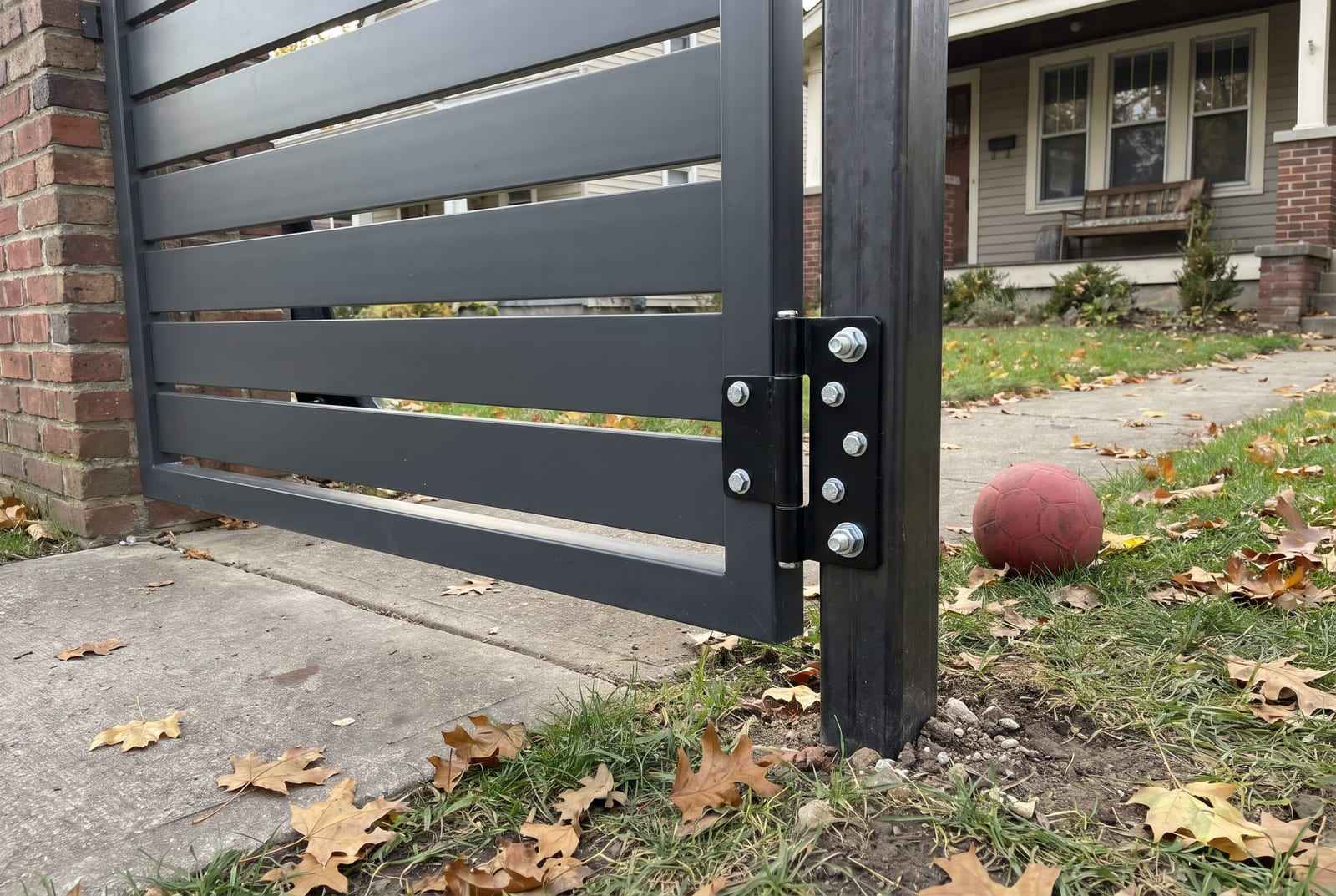
Signs a Gate Needs Repair
Gates rarely fail all at once. They drop a little, rub a little and need a harder push each week, until the latch stops catching. Any of these means a part has worn or moved:
- The gate sags, its far end lower than the hinge side.
- The bottom drags on the ground or scrapes the same arc into the gravel.
- The latch won’t line up, or it only catches when the gate is lifted.
- The hinges squeal or grind, or the leaf jerks as it swings.
- A panel or rail is bent, cracked or pulling away from the frame.
- A post leans, or a gap has opened in the ground around its base.
Each sign has a short list of likely causes, matched one by one under signs and symptoms. Catching them early matters. A sagging gate hangs its weight on one hinge, and a dragging one strains whatever pushes it, a hand or a motor.
Repair Rather Than Replacement
A gate is a frame hung on posts, with a few parts that carry it, guide it and hold it shut. The frame usually outlasts those parts by years. When a gate sags, drags or won’t close, the cause is nearly always one of the parts that move or bear weight, not the frame, and a repair puts the gate back in line without changing how it looks.
Haisley Gate Services repairs sagging hinges, worn rollers, bent tracks and burned-out operator motors. The frame is the dividing line. Where it has rusted through, rotted or folded, new hardware has nothing sound to hold on to.
Repair or Replace
When is a gate worth repairing rather than replacing?
When the frame is sound. Hinges, latches, rollers and stops can all be changed, and a leaning post can be reset, on a gate whose frame is straight and solid. The gate then goes back to work looking as it did.
Replacement starts to make sense when the frame itself has failed: steel rusted through at the joints, wood rotted where the boards meet the rails, aluminum bent past straightening, or a gate patched so many times that each repair brings on the next. At that point a new gate is the sounder choice.
Can a sagging wooden gate be straightened?
Often, if the wood is still firm. A wooden leaf sags when its joints loosen and the frame racks out of square. A diagonal brace from the lower hinge corner up to the upper latch corner, or a tension cable running the other way, pulls it back into shape.
Where the boards have gone soft at the joints, the wood no longer holds screws or a brace, and the sag comes back however often it is corrected.
Gate Parts and What Goes Wrong
Seven parts do most of the work on a swing or sliding gate. Knowing their names makes the trouble easier to describe on the phone.

| Part | What it does | What goes wrong |
|---|---|---|
| Post | Holds the gate up on the hinge side and gives the latch something to meet on the other. | Leans under the gate’s weight, or is lifted and tilted by frost heave over an Ann Arbor winter. A post that moves takes the whole gate out of line. |
| Hinge | Carries the gate’s weight and lets it swing. | Wears at the pin, loosens at its bolts or bends, so the leaf drops at the far end. Dry hinges squeal; worn ones grind. |
| Latch | Holds the gate shut against its keeper on the post. | Misses its keeper once the gate sags or the post moves. Springs weaken and fixing bolts work loose. |
| Roller or wheel | Carries a sliding gate along its track, or holds up the far end of a heavy swing leaf. | Bearings wear out or seize, and a flat or cracked wheel makes the gate jump, grind or stall. Road salt thrown up from the street speeds the wear. |
| Track | Gives a sliding gate’s wheels a straight, level path across the opening. | Gets bent by a tire, packed with gravel and leaves, or lifted at one end so the gate rolls back on its own. |
| Gate frame and panels | The rails, uprights and infill that give the gate its shape and strength. | Racks out of square so one corner drops. Welds crack, wood rots at the joints, and panels bend where something hit them. |
| Stop or catch | Ends the gate’s travel at the closed point and holds an open leaf back. | Breaks or bends, so the gate swings past closed and wrenches its hinges, or the drop rod on a double gate no longer meets its socket. |
A Repair Starts at the Post
A repair visit looks at the gate as a whole before any part comes off. A new hinge on a leaning post wears out the way the old one did, and the same sag returns within a season.
A technician usually works from the ground up:
- whether each post stands plumb and firm in its footing;
- the hinges, for wear at the pins, loose bolts and how far the leaf lifts when the far end is raised;
- the frame, measured corner to corner to see whether it has racked;
- the latch line, with the gate closed gently and then with a push;
- on a sliding gate, the wheels, the track, the guide rollers at the top and the stops at each end;
- on an automatic gate, whether the gate moves easily by hand with the opener released.
That last check tells gate trouble from opener trouble. A gate that drags often looks like a failing motor when the real cause is a dropped hinge or a sagging post. Once the cause is put right, the gate is worked and tested before the job counts as done.
While the Gate Waits
Is it safe to use the gate while it waits for a repair?
A gate that only sags, squeals or needs a lift to latch can usually stay in use with care. Open and close it slowly by hand, and keep children from swinging on it.
Stop using it if it hangs from one hinge, if a post moves when the gate is pushed, or if a sliding gate has jumped its track. Prop or tie it in one position, open or shut, so its weight rests on the ground rather than the hinges. On an automatic gate, switch the opener off and move the gate with the manual release instead of letting the motor fight the fault.
Does a dragging gate mean the opener is failing?
Not often. An opener pushes whatever it is attached to, and a gate that has dropped onto the drive makes it strain, stall or reverse. The motor then takes the blame. Setting the hinge or post right usually brings the opener back to normal.
When the motor itself has burned out from straining, it is one of the gate opener repairs, done once the gate moves easily again.
A Gate Back in Line
Say which way the gate sags, where it rubs and whether it runs on an opener. That is enough to book the repair.