
Gate Maintenance in Ann Arbor
A gate that is looked after moves freely by hand and asks less of its opener. Some of the care is a homeowner’s job; the rest needs the power off and a technician’s tools.
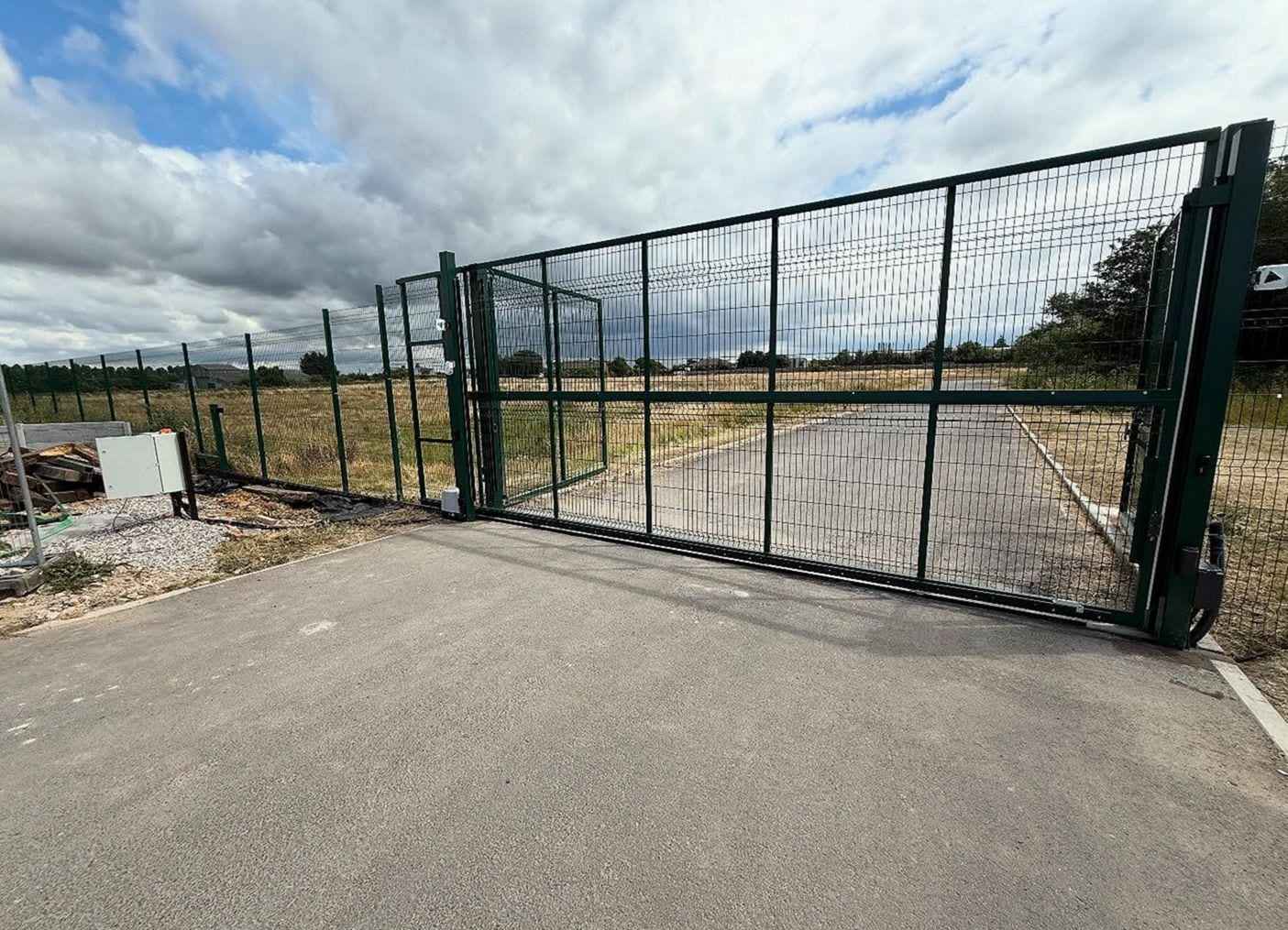
Signs a Gate Is Due a Service
Gates rarely fail all at once. They get louder, slower and stiffer first, and each of those is easier to deal with early, before one worn part takes others with it.
- It squeaks, squeals or groans as it moves, or makes a noise it did not make last year.
- Rust shows at the hinges, the welds, the bottom rail or the rollers.
- It opens or closes slower than it used to, or the opener sounds as if it is straining.
- The latch needs a lift or a push before it catches.
- Leaves, grit or gravel collect in the track or under the gate.
- Nobody has looked at it in years, or ever since it was hung.
What a Service Covers
A service is the gate’s routine care. A technician usually cleans and lubricates the hinges and rollers, clears the track, tightens hinge bolts and brackets, checks that the posts still stand plumb, and looks at the opener’s arm or chain, its limit settings and the safety sensors. The gate is then run open and closed and tested before the visit ends.
Most of what a service finds is small: a dry hinge pin, a loose bracket, a sensor knocked slightly out of line. Left alone, a dry pin wears oval, the leaf drops, the gate starts to drag, and the opener works harder on every cycle. Caught at the pin, the fix stays at the pin.
When a service turns up more than upkeep, such as a post that has moved or a roller worn flat, the work becomes gate repair.
Upkeep Tasks
Some upkeep is safe for a homeowner with a brush, a rag and a can of light lubricant. Anything on the opener, the wiring, the limit and force settings or a spring is not, and neither is any job that means standing in the gate’s path while it can move. On an automatic gate, switch the opener off at its power before touching the moving parts, even to clean them.
| Task | What to look for | Do it yourself or call us |
|---|---|---|
| Look the gate over | Bent pickets or slats, cracked welds, loose screws, a gap at the latch that has grown or closed up. | Do it yourself, a few times a year. |
| Hinges | Rust, a pin that rattles, a leaf that sits lower at the latch end than it used to. | Lubricate the pins yourself. Call us for a worn hinge or a sagging leaf. |
| Rollers and guide wheels | Flat spots, wobble, grinding, or a roller that has stopped turning. | Brush off grit yourself. Call us to replace worn rollers. |
| Track | Stones, leaves, grit and ice in the rail, or a dent or bend in it. | Sweep and clear it yourself. Call us for a bent track. |
| Posts | A lean, cracks in the concrete at the base, or movement when the gate swings. | Call us. A post that moves is where most sagging starts. |
| Latch and lock | A latch that needs a lift or a shove, a lock that turns stiffly. | Lubricate the lock yourself. Call us if the latch no longer lines up. |
| Safety sensors | Dirt or cobwebs on the lenses, a sensor knocked out of line, a gate that will not close. | Wipe the lenses yourself. Call us if the gate still refuses to close. |
| Opener arm or chain | Loose mounting bolts, rust on the chain, a click or knock at the pivots. | Call us. The opener’s power has to be off before anyone works on it. |
| Limit and reversing settings | A gate that stops short, runs past its stop, or does not reverse when it meets something. | Call us, and stop using the gate until it reverses again. |
| Paint and finish | Chips down to bare metal, peeling coating, wood stain worn through. | Wash and touch up yourself. Call us if rust has eaten into the frame. |
Photo-eye sensors sit in pairs at the gate’s end or on its posts, facing each other across the opening. A cobweb, a film of road grime or a bracket knocked by a mower is enough to stop them seeing each other, and the gate then refuses to close or reverses on its own. A soft cloth over both lenses often settles it.

A Seasonal Look-Over
Michigan’s seasons work on a gate in a set order: frost moves the posts, wet springs rust the hardware, summer storms bring down branches, and winter packs the track with snow and ice. A short look at the start of each season catches most of it.
- Spring. Check whether the posts have shifted with the thaw and whether the latch still lines up. Rinse road salt off the hinges, rollers and bottom rail, and touch up any rust.
- Summer. Lubricate hinges and rollers, cut plants back from the sensors and the opener, and look the gate over after high winds.
- Autumn. Sweep leaves out of the track and from under the gate, wipe the sensor lenses, and put fresh batteries in the remotes before the cold weakens them.
- Winter. Keep plowed snow out of the slide path and the swing arc. Let ice in the track melt instead of chipping it, and never force a frozen gate with the opener.
Service Intervals
How often should a gate be serviced?
As a general guide, a gate with an opener is worth a service about once a year, and a manual gate needs little more than its owner’s own look-over each season. A gate that sees heavy use, on a commercial lot or a shared drive, is usually serviced more often.
The gate’s own signs count for more than the calendar. Noise, rust and slowing down mean it is due, however recent the last service was.
Can I use any oil on the hinges and rollers?
A light spray lubricant made for metal parts suits hinge pins and roller axles. Heavy grease on a sliding gate’s track does the opposite of what you want: grit sticks to it and grinds down the rollers. Keep the track clean and dry, and keep oil off the sensor lenses and the keypad.
Is a service worth it on an old gate?
If the frame is sound and the posts stand straight, yes. An old gate often runs well for years once its hinges, rollers and settings are put right.
A frame rusted through at the joints, or rotted where the hinges bolt on, is the point to ask about a new gate instead.
When the Gate Has Gone Unchecked
Say what the gate does now and how long it has been since anyone worked on it.