
New Swing and Sliding Gates in Ann Arbor
Swing gates, sliding gates and walk gates for driveways, paths and commercial lots, hung on new posts and set up to open by hand or with an opener.
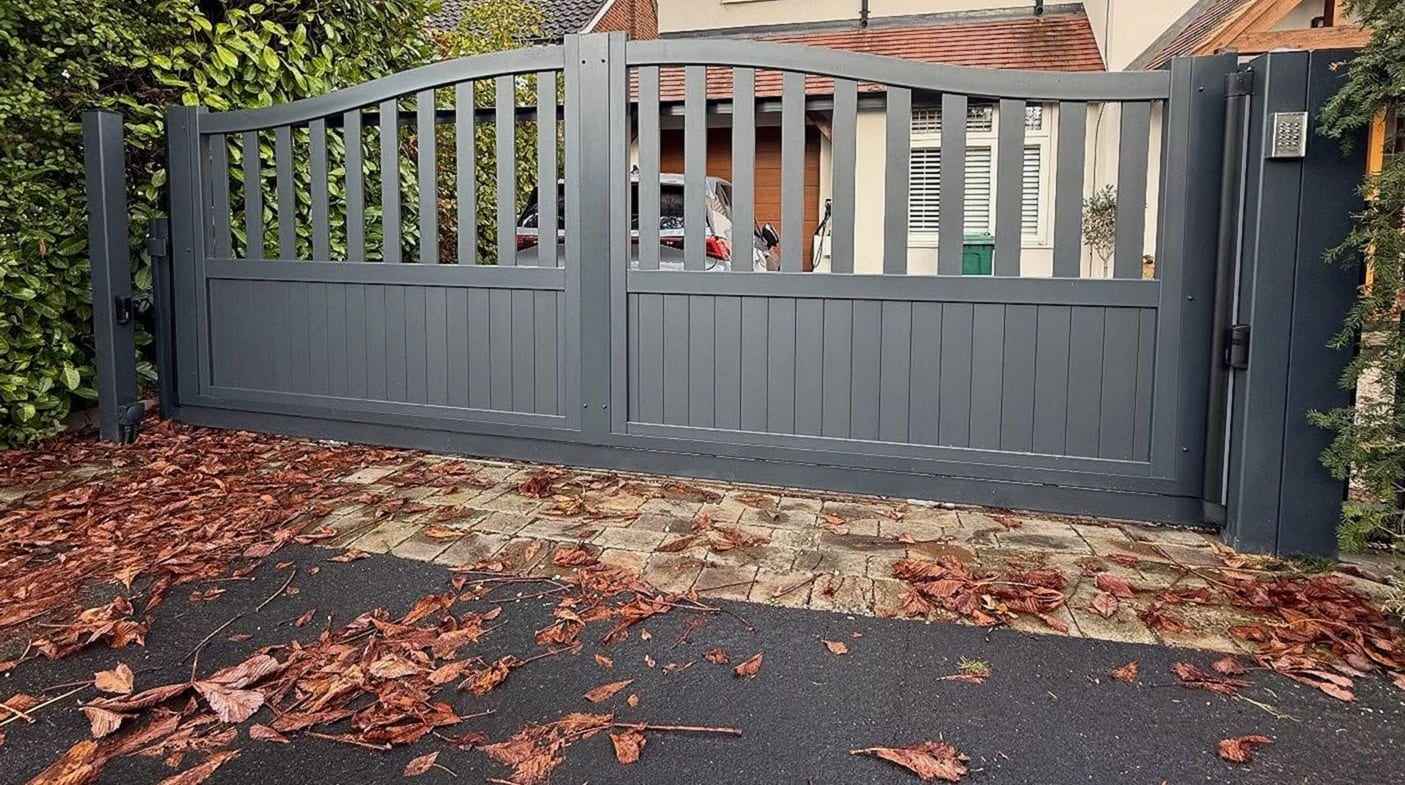
Signs It May Be Time for a New Gate
Some gates are past the point where a hinge or a roller sets them right. A new gate usually comes up in one of these situations:
- The old gate is beyond repair: its frame rusted through, rotted or bent past straightening.
- A new driveway, fence or wall has changed the opening, or left a gap with no gate at all.
- The household wants more privacy, or a business wants its lot closed off at night.
- The gate keeps breaking down, one repair following another.
- The old gate is too light, too heavy or too far out of square to carry an opener.
If the frame is still sound and only the moving parts are worn, gate repair keeps the existing gate working with far less disruption to the drive.
Gate Types
The opening, the slope and the ground around it decide which gate fits before looks come into it. These are the five kinds most homes and lots end up with.
| Gate type | How it moves | Space it needs | Who it suits |
|---|---|---|---|
| Swing gate, single leaf | One leaf on hinges, opening inward or outward. | A clear arc as deep as the gate is wide, on the side it opens to, with no rise in the ground inside that arc. | Narrower driveways and side yards with flat, open ground behind the gate. |
| Swing gate, double leaf | Two leaves on their own posts, meeting in the middle. | Two shorter arcs, one each side of the center, so less depth than a single leaf of the same width. | Wide driveways and entrances where one long leaf would be too heavy to hang well. |
| Sliding gate on a track | Rolls sideways on wheels along a track set across the opening. | A straight, level run beside the opening at least as long as the gate. | Wide openings, short drives, and lots where a swing arc would hit parked cars. |
| Cantilever sliding gate | Slides sideways on rollers mounted on posts beside the opening, with nothing on the ground across the drive. | About half as long again as the opening, because the gate carries a counterbalance tail behind it. | Gravel and uneven drives, and commercial entrances where a track would fill with grit or take heavy traffic. |
| Walk gate | A single narrow leaf on hinges, opened by hand. | A small arc, usually on the inside of the fence line. | Paths beside a driveway gate, side yards and garden fences. |
A driveway gate and a walk gate are often built as a pair, in the same material and pattern, so a trip to the front door on foot never means opening the drive.

Swing or Sliding
Which takes less room, a swing gate or a sliding gate?
It depends on where the room is. A swing gate needs clear ground in front of or behind the opening, as deep as its leaves are long. A sliding gate needs clear ground beside the opening, along the fence line, at least as long as the gate, and longer still for a cantilever.
A short drive with a garage close behind the gate usually suits a sliding gate. A wide lot with open ground behind the gate can take either.
Which works better on a sloped driveway?
A drive that rises behind the gate is the classic trouble for swing gates: the leaf meets the ground partway open. Rising hinges, which lift the leaf as it swings, help on a gentle grade.
On a steeper drive a sliding gate is usually the answer, because it travels along the fence line instead of up the slope. It still needs that strip beside the opening to be level, or graded to be.
Does a sliding gate work in snow?
A track gate needs its track clear, and snow pushed off the drive or ice in the groove stops it. A cantilever gate rides above the ground and copes better, as long as the plow does not bank snow along its path beside the opening.
Swing gates have the same trouble in their arc, which is often harder to keep clear. In an Ann Arbor winter it helps to decide where the snow will go before choosing the gate.
Decisions Before the Call
A few choices shape the whole job. None needs a final answer before the first conversation, but thinking them through makes that conversation shorter.
- Width. Measure the opening between posts or walls, and the ground beside it if a sliding gate is possible. Think of the widest vehicle that will pass: a delivery truck, a trailer, a boat.
- Slope. A drive that rises behind the gate blocks a swing leaf partway through its arc. A slope across the opening affects how a sliding gate’s track or rollers are set.
- Material. Steel, aluminum and wood or woodgrain panels differ in weight, upkeep and look. A heavier gate needs heavier posts and hinges.
- Manual or automatic. A gate meant for one of the gate openers, now or later, needs a frame stiff enough to be pushed from one point, power or a battery at the post, and room for the operator.
- Which way it opens. Inward over the drive, outward only where there is room clear of the sidewalk, or sideways along the fence.
- How often it runs. A household that drives through a few times a day needs different hardware from a lot that opens for every delivery.
Setting Posts and Hanging the Gate
The posts carry everything that follows, so a new gate starts with them. A woodgrain gate on a square steel post is a common pairing: the post takes the weight and the leaf gives the look. The job usually runs in this order.

-
Measuring the Opening
The width, the slope across and behind the opening, and the ground to each side are measured, and the gate’s path is marked out.
-
Setting the Posts
Post holes are dug and the posts set in concrete, deep enough to sit below the frost line so a Michigan winter does not lift them. The concrete cures before the gate’s weight goes on it.
-
Hanging the Gate
The hinges, or a sliding gate’s wheels, rollers and guides, go on, and the gate is set level and plumb so it stays where it is left.
-
Latch, Stops and Opener
The latch, the stops and any drop rod are fitted. On an automatic gate the operator, its wiring and the safety sensors go in last.
A conduit laid under the drive while the posts go in saves digging the drive up later, even if the opener comes years after the gate. Before the job is finished, the gate runs its full travel and is tested.
Plans for a New Gate
Have the width of the opening and the way you want the gate to move in mind. The rest can be settled on site.